The Best Pizza Cutter for Homemade Pizza: 7 Research-Backed Picks for Every Crust
We researched the best pizza cutter for homemade pizza — 7 top picks across wheels, rockers, and scissors, with a full buying guide and care tips.

Quick Comparison Table
| Image | Product | Key Feature | Buy Now |
|---|---|---|---|
| Key Features 🏆 Best Overall | 4-inch stainless steel wheel: Tall enough to stay visible over the pizza and roll through most toppings without dragging. | Buy Now | |
| Key Features 💰 Best Budget | Stainless steel blade: Sharp out of the box and resistant to rust with normal care. | Buy Now | |
| Key Features 🏆 Best for Thick Crust | 16-inch single-piece blade: Long enough to cross most of a half-sheet-pan pizza in one rocking pass. | Buy Now | |
| Key Features 💰 Best Rocker Value | 14-inch stainless steel blade: Full rocker-style cutting power sized for typical home pizzas. | Buy Now | |
| Key Features 🏆 Best for Nonstick Pans | Non-stick-safe spatula blade: The bottom blade doubles as a nylon spatula that won't scratch nonstick, enameled, or seasoned surfaces. | Buy Now | |
| Key Features 🔥 Best Commercial-Grade | 4-inch commercial-grade wheel: The tall, visible blade size independent testers consistently prefer. | Buy Now | |
| Key Features 💰 Best Large Budget Wheel | Oversized stainless steel wheel: Larger than standard budget wheels for easier topping clearance and fewer rolls per slice. | Buy Now |


Tested & Recommended Amazon Products
Research-based comparisons • No hands-on testing
Choosing the best pizza cutter for homemade pizza comes down to blade size, steel type, and handle grip. We compared 7 top-rated wheels, rocker blades, and pizza scissors for thin crusts, thick Detroit-style pans, and everything between — so you can cut clean slices without dragging toppings.
🌟 Key Features That Stand Out
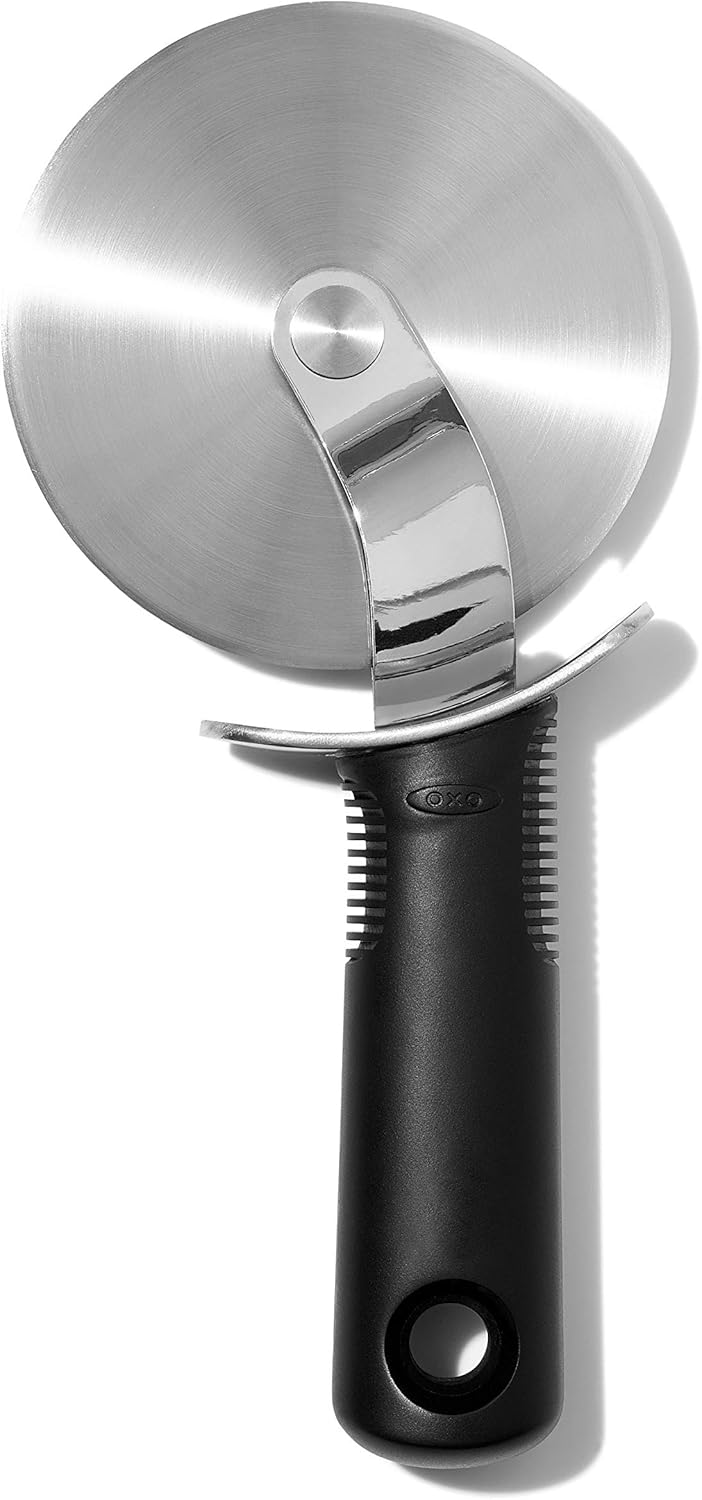
- ✓ 4-inch stainless steel wheel: Tall enough to stay visible over the pizza and roll through most toppings without dragging.
- ✓ Soft, non-slip handle: OXO's signature grip material maintains hold when hands or crust are oily.
- ✓ Heft and balance: Testers consistently note the weight adds downward force for one-pass cuts.
- ✓ Two-prong blade mount: Attaches the blade at two points for stability (with a cleaning trade-off — see Cons).
- ✓ Simple one-piece use: No assembly, no adjustment — pick up and slice.
- ✓ Versatile edge work: Handles pastry dough and flatbread portioning as well as pizza.
💡 Why We Recommend It
🎯 Best For
✅ Pros
- 4-inch stainless steel wheel: Tall enough to stay visible over the pizza and roll through most toppings without dragging.
- Soft, non-slip handle: OXO's signature grip material maintains hold when hands or crust are oily.
- Heft and balance: Testers consistently note the weight adds downward force for one-pass cuts.
- Two-prong blade mount: Attaches the blade at two points for stability (with a cleaning trade-off — see Cons).
- Simple one-piece use: No assembly, no adjustment — pick up and slice.
- Versatile edge work: Handles pastry dough and flatbread portioning as well as pizza.
❌ Cons
- Two-prong mount can trap food between blade and handle, adding cleanup time
- Small wheels of any brand struggle with very thick, heavy pan pizzas
- Blade isn't user-replaceable (unlike our commercial pick)
🌟 Key Features That Stand Out
- ✓ Stainless steel blade: Sharp out of the box and resistant to rust with normal care.
- ✓ Built-in finger guard: A shield between blade and grip that keeps fingers off the cutting edge.
- ✓ Comfort grip handle: Cushioned hold designed to reduce slipping.
- ✓ Dishwasher safe (per listing): The easiest cleanup routine in this roundup.
- ✓ 9-inch overall length: Standard proportions that fit kitchen drawers comfortably.
- ✓ Multi-use edge: Per the listing, also suited to pies and other crusts.
💡 Why We Recommend It
🎯 Best For
✅ Pros
- Stainless steel blade: Sharp out of the box and resistant to rust with normal care.
- Built-in finger guard: A shield between blade and grip that keeps fingers off the cutting edge.
- Comfort grip handle: Cushioned hold designed to reduce slipping.
- Dishwasher safe (per listing): The easiest cleanup routine in this roundup.
- 9-inch overall length: Standard proportions that fit kitchen drawers comfortably.
- Multi-use edge: Per the listing, also suited to pies and other crusts.
❌ Cons
- Smaller effective wheel than our 4-inch picks — more drag on chunky toppings
- Budget-grade steel will need replacing sooner than premium options
- Not designed for very thick pan pizzas
🌟 Key Features That Stand Out
- ✓ 16-inch single-piece blade: Long enough to cross most of a half-sheet-pan pizza in one rocking pass.
- ✓ 304 stainless steel: A corrosion-resistant, food-safe grade of stainless commonly used in quality cutlery.
- ✓ Rocking geometry: Converts arm weight into a powerful downward shear — no sawing required.
- ✓ No moving parts: One stamped blade means nothing to loosen, wobble, or trap cheese.
- ✓ Multi-purpose shape: Doubles as a chopper for herbs, salads, and other prep (as mezzaluna-style blades do).
💡 Why We Recommend It
🎯 Best For
✅ Pros
- 16-inch single-piece blade: Long enough to cross most of a half-sheet-pan pizza in one rocking pass.
- 304 stainless steel: A corrosion-resistant, food-safe grade of stainless commonly used in quality cutlery.
- Rocking geometry: Converts arm weight into a powerful downward shear — no sawing required.
- No moving parts: One stamped blade means nothing to loosen, wobble, or trap cheese.
- Multi-purpose shape: Doubles as a chopper for herbs, salads, and other prep (as mezzaluna-style blades do).
❌ Cons
- Awkward and oversized for small round pizzas
- Requires careful storage; no protective cover included with this listing
- Not the right tool for beginning cooks or households with kids
🌟 Key Features That Stand Out
- ✓ 14-inch stainless steel blade: Full rocker-style cutting power sized for typical home pizzas.
- ✓ Included protective cover: Safe storage and drawer reach-in protection — a genuine safety feature most rockers omit.
- ✓ Wooden handles: Classic mezzaluna look with a warm, secure two-handed or single-handle grip.
- ✓ Single-piece construction: No pivots or fasteners to collect cheese and sauce.
- ✓ Budget positioning: One of the least expensive covered rockers on Amazon.
💡 Why We Recommend It
🎯 Best For
✅ Pros
- 14-inch stainless steel blade: Full rocker-style cutting power sized for typical home pizzas.
- Included protective cover: Safe storage and drawer reach-in protection — a genuine safety feature most rockers omit.
- Wooden handles: Classic mezzaluna look with a warm, secure two-handed or single-handle grip.
- Single-piece construction: No pivots or fasteners to collect cheese and sauce.
- Budget positioning: One of the least expensive covered rockers on Amazon.
❌ Cons
- Wood handles require hand-washing and dry storage
- Too short to cross a full half-sheet pizza in one pass
- Brand has less independent test coverage than Gozney or Lamson
🌟 Key Features That Stand Out
- ✓ Non-stick-safe spatula blade: The bottom blade doubles as a nylon spatula that won't scratch nonstick, enameled, or seasoned surfaces.
- ✓ Spring-loaded handles: The scissors re-open themselves, reducing hand fatigue over a whole pie.
- ✓ Cut-and-serve action: Each squeeze cuts a slice and lifts it — portioning and serving in one motion.
- ✓ Stainless steel cutting blade: The top blade does the shearing and can be sharpened like ordinary shears.
- ✓ Ergonomic offset grip: Designed so hands stay clear of the pizza and grip stays comfortable.
💡 Why We Recommend It
🎯 Best For
✅ Pros
- Non-stick-safe spatula blade: The bottom blade doubles as a nylon spatula that won't scratch nonstick, enameled, or seasoned surfaces.
- Spring-loaded handles: The scissors re-open themselves, reducing hand fatigue over a whole pie.
- Cut-and-serve action: Each squeeze cuts a slice and lifts it — portioning and serving in one motion.
- Stainless steel cutting blade: The top blade does the shearing and can be sharpened like ordinary shears.
- Ergonomic offset grip: Designed so hands stay clear of the pizza and grip stays comfortable.
❌ Cons
- Slower than a wheel or rocker for large pizzas
- Spatula blade can slightly restrict cutting angle (noted in F&W testing)
- Not a substitute for a rocker on thick Detroit-style crusts
🌟 Key Features That Stand Out
- ✓ 4-inch commercial-grade wheel: The tall, visible blade size independent testers consistently prefer.
- ✓ Sani-Safe textured handle: Slip-resistant grip designed for sanitary cleaning in food-service settings.
- ✓ Replaceable blade design: When the wheel eventually dulls, replace the blade instead of the whole tool.
- ✓ Made in USA: Manufactured in Dexter-Russell's Massachusetts facility.
- ✓ Provenance: The cutter Wirecutter reports is standard equipment in New York slice shops.
💡 Why We Recommend It
🎯 Best For
✅ Pros
- 4-inch commercial-grade wheel: The tall, visible blade size independent testers consistently prefer.
- Sani-Safe textured handle: Slip-resistant grip designed for sanitary cleaning in food-service settings.
- Replaceable blade design: When the wheel eventually dulls, replace the blade instead of the whole tool.
- Made in USA: Manufactured in Dexter-Russell's Massachusetts facility.
- Provenance: The cutter Wirecutter reports is standard equipment in New York slice shops.
❌ Cons
- Priced like premium kitchen equipment
- Utility-grade appearance; no soft-grip ergonomics
- Blade requires periodic sharpening or replacement
🌟 Key Features That Stand Out
- ✓ Oversized stainless steel wheel: Larger than standard budget wheels for easier topping clearance and fewer rolls per slice.
- ✓ Patented design (per listing): A differentiated construction rather than a generic rebrand.
- ✓ Ergonomic handle: Shaped for a firm, controlled grip.
- ✓ Sharp out of the box: Marketed for clean cutting through crust and toppings.
- ✓ Budget positioning: Large-wheel performance without premium pricing.
💡 Why We Recommend It
🎯 Best For
✅ Pros
- Oversized stainless steel wheel: Larger than standard budget wheels for easier topping clearance and fewer rolls per slice.
- Patented design (per listing): A differentiated construction rather than a generic rebrand.
- Ergonomic handle: Shaped for a firm, controlled grip.
- Sharp out of the box: Marketed for clean cutting through crust and toppings.
- Budget positioning: Large-wheel performance without premium pricing.
❌ Cons
- Exact blade diameter not verified — check the listing
- No independent lab-test coverage located
- Blade not replaceable
🏆 Our Top Pick
How to Choose the Best Pizza Cutter for Homemade Pizza
Most pizza-cutter regret comes from buying on autopilot — grabbing the cheapest wheel or the prettiest rocker without matching the tool to the pizza you actually bake. Work through these criteria in order and the right choice usually selects itself.
Match the Style to Your Pizza: Wheel, Rocker, or Scissors
Three tool families cut pizza, and they optimize for different things. Rolling wheels are the all-rounders: fast, intuitive, best on thin-to-medium crusts cut on a board. Rocker blades (mezzaluna) apply vertical force, making them the thick-crust and sheet-pan specialists — Serious Eats and Sporked both found rockers outperform wheels on dense Detroit-style pies. Pizza scissors prioritize surface protection and cut-and-serve convenience at the cost of speed. Identify which of your pizzas dominates — thin round, thick rectangular, or pan-baked — and let that choose the family before any brand decision.
Blade Size: Why 4 Inches Is the Sweet Spot for Wheels
Wheel size determines how easily the blade clears toppings. Small wheels (2.5–3 inches) snag on chunky toppings and require multiple passes. The 4-inch wheel — used by America's Test Kitchen's winning Mercer, the OXO, and the Dexter-Russell — keeps the blade visible over the pizza and rolls through toppings in one pass. For rockers, size instead to your pizza: 14 inches covers standard 12–14-inch round pies; 16 inches spans a half-sheet. Bigger is not automatically better with rockers — an oversized blade is clumsy on a small pie.
Blade Material: Carbon Steel vs. Stainless Steel
Serious Eats' top pick uses carbon steel, which takes and holds a keener edge than most stainless — but demands care, since carbon rusts if stored wet. Stainless steel (including 430 and 304 grades) trades a little edge retention for rust resistance and easy maintenance, which is why nearly every mass-market wheel uses it. For most home cooks, stainless is the right default; carbon steel rewards people who hand-wash and dry their tools diligently. If you see "304 stainless," that's a quality food-grade alloy. Ignore marketing terms like "surgical steel" — grades and care instructions tell you more.
Handle Design and Grip
America's Test Kitchen's analysis of cutting biomechanics found that traditional handled wheels engage larger, stronger finger-flexing muscles than palm-draped "hand wheel" designs, giving handled cutters more real-world force. Look for: a textured or soft grip that stays secure when greasy, a handle long enough for a full grip, and a finger guard if children will use the tool. Handleless disc wheels are compact and storage-friendly but demand more pressure — Sporked found even the best one needed considerable force for clean slices.
Cutting Surface Compatibility
Where you cut determines both blade life and pan safety. Never roll a wheel directly on a pizza stone, pizza steel, or bare metal pan — Serious Eats identifies hard surfaces as the fastest way to dull a blade, and it scratches your bakeware. Transfer the pizza to a wood or plastic cutting board, or choose the Dreamfarm Scizza, whose spatula blade is explicitly safe on nonstick and seasoned surfaces. If your workflow always cuts in-pan, that single requirement should drive your whole purchase.
Cleaning and Maintenance
Open, single-prong designs rinse clean in seconds; multi-prong mounts and hooded blades trap cheese and sauce. Check whether the listing claims dishwasher safe — several budget wheels do — but note that independent testers still recommend hand-washing sharp edges, both for edge life and handle longevity. Wood-handled rockers should never see a dishwasher. Seek out replaceable blades (Mercer and Dexter-Russell offer them) if you want a buy-it-for-life option, and plan on occasional sharpening for any frequently used wheel.
Safety and Storage
Every tool in this guide is a sharp blade and deserves storage planning. Wheel cutters should have blade guards or store in drawers with the blade protected; many budget wheels ship without covers, so budget for a guard or blade sheath. Rocker blades are the highest-risk item — 14 to 16 inches of exposed edge — which is why we weighted the ZOCY's included cover heavily. Scissors are the lowest-risk storage story. In households with children, the KitchenAid's built-in finger guard plus covered storage is the sensible combination.
Budget, Value, and Warranty
The category splits cleanly: budget wheels (roughly the KitchenAid and Gorilla Grip tier) cover casual use well; midrange tools like the OXO and Scizza add proven design and ergonomics; premium/commercial picks (Dexter-Russell, premium rockers) buy durability and serviceability. Prices shift constantly, so compare current listings rather than trusting any article's figures. Check warranty terms before buying: OXO guarantees its products against defects, Dexter-Russell warranties its professional line, and generic rockers typically offer only Amazon's standard return window. A longer warranty matters most on tools you'll use weekly.
Common Buying Mistakes
Avoid these five errors. One: buying a mini wheel for thick-crust pizzas — the most common mismatch we see. Two: cutting on stone or metal, which wrecks any blade. Three: choosing a rocker without storage space for a covered 14–16-inch blade. Four: trusting listing photos alone for blade size — verify the stated dimension, as with our Gorilla Grip caveat. Five: assuming price equals sharpness; some of the best-reviewed cutters cost little, and the difference is design, not marketing.
Practical Tips for Getting the Most From Your Pizza Cutter
- Always cut on a board, never on the stone. Transfer the pizza to a wood or plastic cutting board before slicing. Hard surfaces dull blades faster than anything else and scratch pizza stones and pans.
- Let the pizza rest two to three minutes first. Steam escaping the crust keeps cheese from smearing along the cut line — wait briefly and even a modest wheel cuts cleaner.
- Use one confident pass for wheels, weight for rockers. Roll the wheel in a single stroke rather than sawing back and forth; with a rocker, let the blade's weight do the work and rock, don't chop.
- Cut thick pizzas with the rocker, thin with the wheel. Reserve your rocker for Detroit-style and pan pizzas, and use the wheel for thin rounds — using each tool where its geometry wins keeps cuts clean.
- Hand-wash and dry immediately, even if dishwasher safe. Hot dishwasher cycles dull edges and can crack soft-grip handles over time; a ten-second rinse and towel-dry preserves both.
- Store every blade covered. A blade guard or sheath protects the edge — and your fingers when you reach into the drawer. Rockers especially should never live bare in a drawer.
- Sharpen or replace on schedule. A wheel that starts compressing crust instead of slicing it is dull. Use a sharpening rod on the bevel, or replace the blade if your model supports it (Mercer and Dexter-Russell do).
- Keep a dedicated serving tool pair. If you don't have cut-and-serve scissors, pair your cutter with a thin spatula so slices lift without the cheese re-sealing along the cut.
Pizza Wheel vs. Rocker vs. Scissors: Which Style Wins for Homemade Pizza?
The honest answer is that each style wins a different pizza. The wheel wins on versatility and speed for thin and medium crusts on a cutting board — it's the style every independent testing lab has ranked first overall, and the one to buy if you own just one cutter. The rocker wins wherever downward force matters: thick Detroit and Sicilian slabs, heavy toppings, sheet-pan bakes. Sporked found its budget mezzaluna out-cut nearly every wheel on Detroit-style crust, and Serious Eats crowned a rocker its best rocking-style pick. The scissors win on surface protection and serving — cutting directly on nonstick pans and lifting each slice out — but they're the slowest style on big pies. If you bake mostly thin round pizzas, buy the OXO wheel and stop reading. If your oven turns out pan pizzas weekly, the rocker is the better primary tool. If you bake in nonstick and hate transferring hot pizzas, the Scizza earns its counter space. Many serious home pizza makers eventually own a wheel plus one specialist; starting with the wheel is rarely wrong.
Which Pizza Cutter Features Are Worth Paying Extra For?
Four upgrades genuinely pay. Blade size (to 4 inches) is the highest-value upgrade in the category — it directly determines cut quality on real homemade pizzas. Ergonomic non-slip grips earn their premium every time your hands are greasy; this is where budget wheels most often feel cheap. Replaceable blades (Mercer, Dexter-Russell) convert a consumable into a permanent tool and justify themselves for frequent users. A protective cover for rockers is a safety essential, not an accessory. Three "upgrades" usually aren't worth it: novelty hand-wheel designs that hide the blade and weaken grip force (per ATK's biomechanics analysis); premium handles on otherwise standard wheels; and multi-tool gadgets where the pizza function is compromised. Between the $10-tier and the $25-tier, the money is best spent on blade size and grip — exactly what separates our KitchenAid budget pick from the OXO recommendation above.
Final Thoughts: Which Pizza Cutter Should You Buy?
Strip this guide down and the decision is simple. For most people making pizza at home, buy the OXO Good Grips 4-Inch Pizza Wheel — it pairs the blade size that independent testers consistently prefer with the most comfortable grip in its class, and it carries the strongest multi-source evidence of any cutter we researched. If budget is the constraint, the KitchenAid Classic Pizza Wheel delivers a safe, dishwasher-friendly wheel at a fraction of the price. If your pizzas come out of Detroit-style or sheet pans, add the 16-inch 304 stainless rocker — no wheel matches its thick-crust shearing force — or the covered ZOCY 14-inch rocker if storage and budget favor it. If you cut in nonstick pans, the Dreamfarm Scizza is the only tool here designed for that surface. And if you cut pizza weekly and want the last cutter you'll ever buy, the Dexter-Russell Sani-Safe is the slice-shop standard with a replaceable blade. The single most important consideration: match the tool to the crust you actually bake, and always cut on a board — a great cutter on a stone is still a dull cutter in waiting. Verify current prices and specifications on each listing before purchase, since both change frequently.