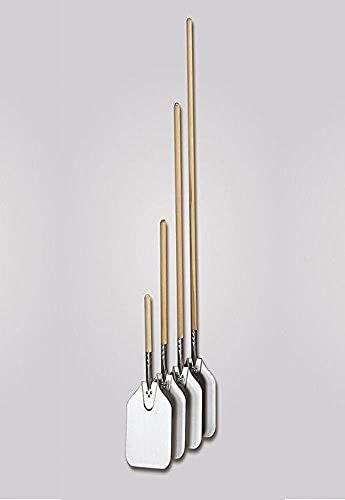
Best Pizza Peel for Beginners: 10 Research-Backed Picks for Home Ovens

Looking for the best pizza peel for beginners? We compare 10 wood, bamboo, aluminum, and perforated peels by blade size, handle length, and ease of launching — so first-time pizza makers can match a peel to their oven and dough style with confidence. (48 words)

E
EatYay Editorial
*EatYay earns affiliate commissions on qualifying Amazon purchases.
FTC disclosure: This page contains affiliate links. If you buy through them, we may earn a commission at no extra cost to you. Full details on our Affiliate Disclosure page.

Quick Comparison Table

Image Product Key Feature Buy Now
Key Features Key Features 🏆 Best Overall Basswood blade: raw dough clings less to wood than to bare aluminum, giving new bakers a wider margin for launch error. Buy Now
Key Features Key Features 💰 Best Budget 12-inch aluminum blade: sized for countertop pizza ovens and 12-inch pies. Buy Now
Key Features Key Features 📐 Best for Small Kitchens Foldable wooden handle: collapses the peel to drawer-friendly depth — the standout storage feature. Buy Now
Key Features Key Features 🏆 Best for Outdoor Pizza Ovens Perforated blade: shakes off excess flour or cornmeal before launch, reducing the burnt-flour taste high-heat ovens amplify. Buy Now
Key Features Key Features 💰 Best Budget Foldable 13" x 15" aluminum blade: a step wider than 12-inch peels, handling 14-inch pies on home-oven stones. Buy Now
Key Features Key Features 👑 Best Premium 38-inch wooden handle: keeps hands and forearms well clear of a deep oven mouth. Buy Now
Key Features Key Features 🏆 Best Perforated for Home Ovens Perforated 12" x 15" blade: sheds excess flour before launch while supporting rectangular dough shapes. Buy Now
Key Features Key Features 🏆 Best for Big Pies 14" x 16" solid aluminum blade: full support for 16-inch pies and rectangular bakes. Buy Now
Key Features Key Features 📐 Best Compact Wood 12-inch bamboo blade: matched to countertop pizza ovens and 12-inch pies. Buy Now
Key Features Key Features 🏆 Best Detachable Handle Detachable handle: pulls off the blade for drawer-flat storage between bakes. Buy Now

Tested & Recommended Amazon Products

Research-based comparisons • No hands-on testing

Looking for the best pizza peel for beginners? We compare 10 wood, bamboo, aluminum, and perforated peels by blade size, handle length, and ease of launching — so first-time pizza makers can match a peel to their oven and dough style with confidence. (48 words)

🏆 Best Overall

🌟 Key Features That Stand Out

  • ✓ Basswood blade: raw dough clings less to wood than to bare aluminum, giving new bakers a wider margin for launch error.
  • ✓ 16" x 14" blade: room for 14-inch round pies and rectangular flatbreads; fits most home-oven stones and steels.
  • ✓ 8-inch handle: a short reach that suits indoor oven depths where a long handle only gets in the way.
  • ✓ Dual-purpose design: works as a serving or presentation board once the pizza is baked.
  • ✓ Wood construction: lighter in the hand than an equivalently sized metal peel, which helps on wobbly first launches.
  • ✓ Long market track record: one of the most widely reviewed wooden peels on Amazon, giving buyers a deep feedback history to check before purchasing.

💡 Why We Recommend It

Based on its published specifications and long record of buyer feedback, this is the peel we would hand a first-time pizza maker. The basswood surface addresses the number-one beginner failure — dough welding to the blade before launch — because wood absorbs trace moisture from dough and releases it more readily than metal. The 16-by-14-inch blade matches the most common home pizza size with margin to spare, and the short handle is genuinely easier to control over a home-oven door than a 30-plus-inch pole. Compared with bamboo serving-style boards, basswood is lighter with a thinner working edge; compared with budget aluminum peels, it trades turn-and-retrieve ability for launch forgiveness. The honest trade-off: this is a launch-and-serve tool, not an all-oven tool, and it needs hand care that metal never will.

🎯 Best For

This is the peel for home-oven bakers who cook on a stone or baking steel and want one tool that launches and serves. It suits beginners whose pies run 12 to 14 inches, whose dough leans wet, and who would rather not learn on a slick metal blade. It's also a sensible fit for small kitchens where a full pizza-gear wall isn't welcome. It's less suitable if you own a 12-inch countertop pizza oven — the blade won't pass through the opening — or if you need to turn and retrieve pies inside a high-heat oven, which wood is not built for.
✅ Pros
  • Wood surface releases sticky dough more forgivingly than metal
  • 16-by-14-inch blade handles 14-inch pies and rectangular flatbreads
  • Short handle is easy to control at a home-oven door
  • Doubles as a rustic serving board
  • Extensive buyer-feedback history on this exact model
❌ Cons
  • Blade is too wide for 12-inch countertop pizza ovens
  • Wood requires hand washing and thorough drying — no dishwasher
  • Not suitable for turning or retrieving pizzas in high-heat ovens
💰 Best Budget

🌟 Key Features That Stand Out

  • ✓ 12-inch aluminum blade: sized for countertop pizza ovens and 12-inch pies.
  • ✓ Bundled rocker cutter: slice pizzas on a board without buying a second tool.
  • ✓ Thin metal edge: slips under pizzas — especially baked ones — more easily than a thick wooden board.
  • ✓ Lightweight build: keeps first launches steady and is easy to wash and shelve.
  • ✓ Two-piece kit value: peel and cutter together cover a beginner's basic pizza workflow.

💡 Why We Recommend It

The Mooues earns its budget badge by being complete rather than merely cheap. The aluminum blade gives you the thin-profile advantage — sliding under pizzas and retrieving them is noticeably easier with metal than with a thick board — and the included rocker cutter covers slicing, which beginners otherwise forget to budget for. Compared with the Checkered Chef, another budget aluminum peel, the Mooues bundles a cutting tool; compared with wooden peels, it demands more dusting discipline because wet dough clings to bare metal more readily. The trade-offs are real but predictable: the 12-inch blade limits pie size, and metal surfaces punish a slow, hesitating launch with sticking. For a first foray into pizza making, those are acceptable constraints.

🎯 Best For

Buy this if you're testing whether homemade pizza becomes a habit, if you own a 12-inch countertop or outdoor pizza oven, or if you're equipping an apartment kitchen where every tool must earn its drawer space. The bundled cutter means a dorm, RV, or first-apartment cook gets a complete mini pizza station from one purchase. It's a weaker fit if you regularly bake 14-to-16-inch pies — the 12-inch blade caps your size — or if your dough is very high hydration and you want the most forgiving launch surface, which is wood.
✅ Pros
  • Complete peel-plus-cutter kit at an entry-level price point
  • 12-inch blade matches countertop pizza ovens
  • Thin aluminum edge retrieves baked pizzas cleanly
  • Lightweight and easy to store in small kitchens
❌ Cons
  • 12-inch blade caps pizza size at roughly 12 inches
  • Bare metal demands generous flour dusting with wet dough
  • Bundled cutter is a convenience, not a premium slicing tool
📐 Best for Small Kitchens

🌟 Key Features That Stand Out

  • ✓ Foldable wooden handle: collapses the peel to drawer-friendly depth — the standout storage feature.
  • ✓ 12" x 14" aluminum blade: fits 12-to-14-inch pies and most countertop oven openings.
  • ✓ Thin metal profile: slides under pizzas more readily than thick wooden boards.
  • ✓ Wood-handled warmth: a wooden grip stays comfortable and looks better left out on a counter hook.
  • ✓ Lightweight assembly: aluminum blade plus wood keeps overall heft low for controlled launches.

💡 Why We Recommend It

Based on its published specifications, the Chef Pomodoro earns its category by solving a problem most guides ignore: where the peel lives between pizza nights. The foldable wooden handle cuts stored bulk dramatically while the aluminum blade keeps full launching and retrieval function. Against the Checkered Chef — the other foldable aluminum peel here — it offers a larger 12-by-14 blade and a wood grip rather than bare metal in the hand. Against wooden launch peels, it gives up some launch forgiveness with very wet dough but gains retrieval ability and storage practicality. The hinge is the compromise: it adds a cleaning detail and a potential flex point, which matters more to daily users than to weekend bakers.

🎯 Best For

This peel is built for apartment dwellers, RV cooks, and anyone whose kitchen storage is already contested. It also suits occasional bakers who don't want a 30-inch paddle leaning against the fridge 360 days a year. Beginners who bake in countertop pizza ovens will find the 12-by-14 blade a good match. Choose a fixed-handle peel instead if you bake in a deep outdoor oven and need reach, or if you're rough with gear — a folding hinge is one more moving part to keep clean and aligned.
✅ Pros
  • Foldable handle makes storage genuinely compact
  • 12-by-14-inch blade fits common countertop ovens and home stones
  • Aluminum blade handles both launch and retrieval duties
  • Wooden grip is comfortable and counter-presentable
❌ Cons
  • Folding hinge adds a cleaning detail and a potential flex point
  • Blade is too wide for 12-inch countertop oven openings
  • Metal blade needs careful dusting with high-hydration dough
🏆 Best for Outdoor Pizza Ovens

🌟 Key Features That Stand Out

  • ✓ Perforated blade: shakes off excess flour or cornmeal before launch, reducing the burnt-flour taste high-heat ovens amplify.
  • ✓ 12-inch blade: matches the opening of 12-inch-class outdoor pizza ovens such as compact gas and wood-fired models.
  • ✓ Lightweight swing: perforation cuts weight for faster, more confident launch and turn motions.
  • ✓ Metal edge: thin profile slides under par-baked and turning pizzas cleanly.
  • ✓ Non-stick metal surface: designed for smooth dough release with proper dusting.

💡 Why We Recommend It

Perforated blades are what experienced high-heat oven users gravitate toward, and the logic holds up under scrutiny: excess flour that burns on an oven floor taints every subsequent pizza, and a perforated blade sheds it before launch. Based on its published design, the Hans Grill PRO packages that advantage at a 12-inch size that matches the most common entry-level outdoor ovens, in aluminum light enough for a beginner to swing one-handed. Compared with solid aluminum peels in this guide, it sacrifices a bit of dough support for flour control; compared with wooden launch peels, it trades forgiveness for agility at temperature. Its main limitation is scope: a 12-inch blade is a specialist size, and very soft dough takes practice.

🎯 Best For

This is the peel for someone who has just bought — or is about to buy — a compact outdoor pizza oven and needs a blade that matches its opening and its heat. It suits beginners who want to learn launch-and-turn technique in one tool and who bake frequent, smaller pies. It's a poor match for big 16-inch pies, for cooks who want a peel that doubles as a serving board, or for anyone whose dough is extremely wet — perforations can catch soft, under-floured dough during the launch slide.
✅ Pros
  • Perforations shed excess flour that would burn in high-heat ovens
  • Lightweight blade is easy to swing and turn one-handed
  • 12-inch size matches compact outdoor oven openings
  • Metal edge works for launching, turning, and retrieval
❌ Cons
  • Perforations can catch very wet, under-floured dough
  • 12-inch blade limits pie size and isn't a serving board
  • Overkill for standard home ovens where burnt flour is less of a risk
💰 Best Budget Foldable

🌟 Key Features That Stand Out

  • ✓ 13" x 15" aluminum blade: a step wider than 12-inch peels, handling 14-inch pies on home-oven stones.
  • ✓ Folding handle: collapses for drawer or cabinet storage between bakes.
  • ✓ Thin aluminum profile: slides under pizzas for turning and retrieval as well as launching.
  • ✓ Lightweight one-hand use: aluminum keeps the loaded swing manageable for new bakers.
  • ✓ Flat-packing design: suits apartments, RVs, and shared kitchens.

💡 Why We Recommend It

Based on its published specifications, the Checkered Chef occupies a useful niche: foldable storage like the Chef Pomodoro, but with a larger 13-by-15 blade that widens your pizza ceiling to 14-inch pies. Compared with the Chef Pomodoro, it trades the wooden grip and slightly warmer aesthetics for extra blade width; compared with the New Star wooden peel, it gives up launch forgiveness but gains turning and retrieval ability and a thinner under-slice profile. The compromises are the usual aluminum ones — more dusting discipline with wet dough, and a hinge that adds one cleaning step. For storage-constrained beginners who still want size headroom, the trade is sensible.

🎯 Best For

This peel fits home-oven bakers who want more working width than a 12-inch peel without committing shelf space to a full-size paddle. It suits beginners baking 13-to-14-inch pies on stones or steels, and occasional bakers who store gear rather than display it. It's a weaker choice for 12-inch countertop pizza ovens — check your opening — and for very wet doughs, where wood's natural release is more forgiving than bare aluminum. If you bake weekly in a dedicated setup, a fixed-handle wooden peel is the better long-term tool.
✅ Pros
  • Foldable storage without sacrificing working width
  • 13-by-15-inch blade handles 14-inch pies
  • Aluminum edge performs launch, turn, and retrieval duties
  • Lightweight and easy for one-handed control
❌ Cons
  • Bare aluminum needs generous flour dusting with wet dough
  • Folding hinge is an extra moving part to keep clean
  • Blade may still be too wide for some 12-inch oven openings
👑 Best Premium

🌟 Key Features That Stand Out

  • ✓ 38-inch wooden handle: keeps hands and forearms well clear of a deep oven mouth.
  • ✓ 16" x 18" extra-large blade: room for 16-inch pies, rectangular bakes, and loaves.
  • ✓ 56-inch overall length: professional reach for deep brick and wood-fired ovens.
  • ✓ Commercial-grade aluminum: the material standard in restaurant pizza kitchens.
  • ✓ Square-cornered blade: maximum usable surface for large rectangular bakes.

💡 Why We Recommend It

The 5616 earns its premium badge on provenance and purpose. American Metalcraft is a decades-old foodservice manufacturer, and this model's published dimensions — 16-by-18 blade, 38-inch handle — match what commercial pizzerias actually use. Independent testing coverage has also singled out American Metalcraft aluminum peels for their light weight and spacious blades, which corroborates the design choice. Against the G.a HOMEFAVOR 14-by-17 perforated long peel, the 5616 offers a larger solid blade suited to big rectangular bakes and deep-oven retrieval; it gives up perforation's flour-shedding and some agility. The trade-offs are storage bulk and a length that's overkill for home ovens — pay for this only if your oven's geometry demands it.

🎯 Best For

Buy this if you cook in a deep wood-fired or brick oven, a big kamado, or any oven where the floor sits well back from the opening — the 38-inch handle exists for exactly that geometry. It also suits ambitious home bakers who want one professional-grade tool rather than a starter upgrade path, and it handles 16-inch pies with margin. Skip it if you bake in a standard home oven: a 56-inch pole is genuinely unwieldy at a kitchen range, and the 18-inch blade won't fit smaller openings.
✅ Pros
  • Genuine commercial-grade construction from a foodservice brand
  • 38-inch handle keeps hands far from deep oven mouths
  • 16-by-18-inch blade handles 16-inch pies and rectangular bakes
  • Aluminum is lightweight relative to its size
❌ Cons
  • 56-inch overall length is unwieldy in standard home kitchens
  • Premium price overkill for home-oven stone bakers
  • Large blade won't fit smaller oven openings
🏆 Best Perforated for Home Ovens

🌟 Key Features That Stand Out

  • ✓ Perforated 12" x 15" blade: sheds excess flour before launch while supporting rectangular dough shapes.
  • ✓ 26-inch overall length: a middle reach that suits countertop ovens and most outdoor ovens.
  • ✓ Aluminum construction: light, rust-resistant, and thin-edged for sliding under pies.
  • ✓ Hanging-friendly design: metal peels like this typically store on a hook (hanging hole presence unverified).
  • ✓ Round-and-rectangular coverage: the 15-inch depth covers longer flatbreads and Detroit-style pans' loading.

💡 Why We Recommend It

Perforated blades solve a specific, well-documented problem: flour that falls off the pizza during launch burns on a hot oven floor and taints the next bakes. Based on its published design, this HOMEFAVOR brings that advantage into a 26-inch overall package that home cooks can actually store and swing, unlike 35-inch-plus commercial formats. Compared with the Hans Grill PRO, it offers a deeper 15-inch blade for rectangular doughs and a longer reach; it concedes a bit of one-hand agility. Compared with solid aluminum peels, it demands slightly gentler dough handling over the holes. For frequent high-heat bakers, those are fair trades.

🎯 Best For

This peel suits home bakers who use high-heat countertop ovens or compact outdoor ovens with 13-to-15-inch openings, and who bake often enough that burnt flour on the oven floor becomes a real annoyance. It also fits beginners who want one metal peel to learn launch-and-turn fundamentals on. It's not the tool for 16-inch pies, for table service, or for cooks whose very wet dough catches on perforations — that baker should start with the New Star wooden launch peel.
✅ Pros
  • Perforations cut burnt-flour problems in high-heat ovens
  • 26-inch overall length fits home and countertop setups
  • 15-inch blade depth supports rectangular and oval doughs
  • Aluminum stays light for repeat launches
❌ Cons
  • Perforations can snag very soft, under-floured dough
  • Not suitable as a cutting or serving board
  • 12-inch width caps pie size
🏆 Best for Big Pies

🌟 Key Features That Stand Out

  • ✓ 14" x 16" solid aluminum blade: full support for 16-inch pies and rectangular bakes.
  • ✓ Collapsible wooden handle: tucks the peel down for cabinet storage despite the big blade.
  • ✓ Solid surface: gives wet dough continuous support during the build and launch slide.
  • ✓ Thin metal edge: slips under baked pizzas for clean retrieval from stones and oven floors.
  • ✓ Table-to-oven versatility: big enough to serve from and light enough to maneuver.

💡 Why We Recommend It

Based on its published specifications, the Old Stone peel fills the most common sizing gap in beginner gear: everything else is 12 inches, and 16-inch pies simply don't fit. The 14-by-16 solid blade provides continuous support — reassuring when you're learning to launch bigger, heavier doughs — while the collapsible wooden handle keeps the stored footprint close to that of a mid-size peel. Against the American Metalcraft 5616, it trades professional reach for home practicality; against the Checkered Chef, it offers four more inches of blade depth for rectangular bakes. The collapsible hinge and bare-metal dusting demands are the honest compromises.

🎯 Best For

This is the peel for owners of 16-inch outdoor ovens and for home bakers whose pies outgrew 12-inch tools. It also fits households that want one large peel for pizza, flatbreads, and bread loaves without storing a 30-plus-inch pole. Choose a smaller peel if your oven opening is 12 inches, and a perforated blade if burnt flour in a high-heat oven is your recurring complaint. Very long deep ovens still call for the American Metalcraft's 38-inch handle.
✅ Pros
  • 14-by-16-inch blade supports 16-inch pies with margin
  • Collapsible handle keeps a large peel storable
  • Solid surface gives continuous support for wet dough
  • Doubles as an oversized transfer and serving board
❌ Cons
  • Too wide for 12-inch oven openings
  • Hinge adds a cleaning detail and potential flex point
  • Metal blade requires careful dusting with high-hydration dough
📐 Best Compact Wood

🌟 Key Features That Stand Out

  • ✓ 12-inch bamboo blade: matched to countertop pizza ovens and 12-inch pies.
  • ✓ Bamboo surface: a wood-family material that releases dough more readily than bare metal.
  • ✓ Two-in-one use: doubles as a small cutting or presentation board.
  • ✓ Lightweight build: keeps loaded launches steady for new bakers.
  • ✓ Compact footprint: stores on a hook or flat in a drawer.

💡 Why We Recommend It

Based on its published specifications, this bamboo paddle addresses a collision most beginner guides ignore: countertop pizza ovens dominate the entry market, while most wooden peels run 14-to-16 inches wide — too big for those openings. A 12-inch wood-family blade is the correct geometry for that oven class. Compared with the Mooues aluminum kit, it trades the bundled cutter and thin retrieval edge for a more forgiving launch surface; compared with the New Star basswood peel, it concedes blade size but adds a two-in-one board function and smaller storage. Bamboo's hard grain also resists knife scarring on the serving side. The limits are inherent: 12-inch pies maximum, and no mid-bake usefulness.

🎯 Best For

This is the peel for beginners whose first oven is a 12-inch-class countertop model and who want wood's forgiving dough release without a full-size paddle's bulk. It suits apartment kitchens, occasional bakers, and households that will also use it as a serving board for smaller pies and flatbreads. Skip it if you bake 14-inch or larger pizzas, and look at aluminum instead if you need a blade that turns and retrieves pizzas inside a hot oven — a bamboo profile is built for launching, not mid-bake maneuvering.
✅ Pros
  • 12-inch width matches compact countertop oven openings
  • Bamboo surface releases dough more forgivingly than metal
  • Doubles as a serving board for small pies
  • Light, easy to store and control
❌ Cons
  • Strictly capped at 12-inch pizzas
  • Thick profile is poor for turning or retrieval
  • Brand identity is not prominent in listing data — check the current seller before buying
🏆 Best Detachable Handle

🌟 Key Features That Stand Out

  • ✓ Detachable handle: pulls off the blade for drawer-flat storage between bakes.
  • ✓ 12" x 14" aluminum blade: fits the openings of 12-inch-class outdoor and countertop ovens.
  • ✓ Oven-maker pedigree: sized by a manufacturer of residential wood-fired brick ovens.
  • ✓ Thin aluminum edge: handles launching, turning, and retrieval in one tool.
  • ✓ Lightweight swing: aluminum keeps repeat launches manageable for beginners.

💡 Why We Recommend It

Based on its published specifications, the Chicago Brick Oven peel earns its slot through specialization. Chicago Brick Oven builds residential wood-fired ovens, and its published guides treat peel sizing, launching, and wood-versus-metal trade-offs as core oven-ownership topics — this peel reflects that same logic. Compared with the Hans Grill PRO, it offers a deeper 14-inch blade for rectangular doughs and a detachable rather than fixed handle; compared with the Mooues, it drops the bundled cutter in favor of a specialist brand's fit and finish. The honest trade-offs are the standard aluminum ones: more dusting discipline with wet dough, no table service, and a 12-inch ceiling on pie size.

🎯 Best For

This peel suits owners of 12-inch-class outdoor pizza ovens who want a reputable, purpose-built tool that stores without a fight. It also fits beginners who value buying from an oven specialist rather than a generic housewares brand, and anyone sharing storage with roommates or small cabinets. It's not for 16-inch pies, for deep ovens that demand a 38-inch handle, or for cooks who want a serving board — aluminum is purely functional.
✅ Pros
  • Detachable handle enables genuinely flat storage
  • Blade sized by an actual oven manufacturer
  • One aluminum tool covers launch, turn, and retrieval
  • Strong fit for 12-inch-class outdoor ovens
❌ Cons
  • Detaching the handle adds a step before and after each bake
  • Bare aluminum requires generous dusting with wet dough
  • 12-inch blade caps pizza size

🏆 Our Top Pick

After extensive research and comparison, our top recommendation is:

Key Features

The New Star Foodservice 16" x 14" wooden peel ranks first because it wins on the criterion that decides whether a beginner keeps making pizza: launch success. Wood releases wet dough more readily than metal, so first launches are more forgiving while technique is still developing. Its 16-by-14-inch blade covers the most common home pizza sizes with margin, the 8-inch handle is genuinely easier to control at a home-oven door than a long pole, and the tool doubles as a serving board — one purchase, two jobs. Against the closest competitors, the logic holds: the Mooues and Checkered Chef are cheaper but metal-slick for sticky dough; the bamboo paddle is more forgiving but caps you at 12-inch pies; the Hans Grill and American Metalcraft are better tools for ovens this peel can't serve. Its limitations are equally clear — it won't fit a 12-inch countertop oven, it needs hand washing and drying, and it can't turn or retrieve pizzas in high heat. If you bake on a stone or steel in a regular oven, this is the peel to start with; countertop-oven owners should buy the bamboo paddle or the Mooues kit instead.

A pizza peel is one of the few tools where the right beginner choice is genuinely simple: pick the material that matches your dough, and pick the size that matches your oven. For home-oven bakers working on a stone or steel, the New Star Foodservice 16" x 14" wooden peel is our best overall pizza peel for beginners — the most forgiving launch surface here, with serving-board utility to spare. Countertop and compact outdoor oven owners should start with the 12-inch bamboo paddle if sticky dough worries them, or the Mooues kit for the cheapest complete setup. Bakers who already own a high-heat outdoor oven will get the most from the Hans Grill PRO's perforated blade, while deep brick ovens justify the American Metalcraft 5616's professional reach. The single most important consideration: measure your oven opening before you buy anything, because no peel — however good — can launch a pizza it can't fit through.

How to Choose the Best Pizza Peel

Skip the marketing and work through five decisions — material, size, peel type, blade style, and handle — in that order. Get those right and almost any quality peel in this guide will serve you well.

Size and Capacity

Match the blade to two things: your oven opening and your typical pizza size. The blade must be narrower than the opening it passes through, so a 12-inch oven needs a 12-inch-or-smaller peel, while a 16-inch oven accepts 12-, 14-, or 16-inch blades. Ooni's own sizing guidance makes the same point: a 12-inch peel works with a 12-inch oven, and any of those sizes works with a 16-inch oven. For standard home ovens with a stone or steel, 14-to-16-inch blades are the sweet spot. Buy too big and the peel won't fit; buy too small and you're forever baking undersized pies.

Wood, Bamboo, or Metal: Picking Your Blade Material

Raw dough sticks less to wood than to aluminum — the consensus across independent testing, manufacturer guides, and experienced home bakers alike. Wood also absorbs trace moisture, which helps release high-hydration dough. Metal's advantage is the opposite end of the bake: a thin aluminum edge slides under cooked pizzas for turning and retrieval, and it's dishwasher-tolerant where wood never is. The practical beginner answer: wood or bamboo for launching, metal for turning and retrieving. Bamboo behaves like wood for launch purposes but is harder, denser, and often thinner.

Launching Peel vs. turning peel

A launching peel has a wide blade — you build the pizza on it and slide it into the oven. A turning peel has a small round blade, often 7-to-9 inches, used to rotate the pizza mid-bake inside a hot oven without pulling it out. In a 60-to-90-second Neapolitan bake in an outdoor oven, turning matters; in a 10-minute home-oven bake on a steel, it rarely does. Beginners can absolutely start with a launching peel alone, then add a turning peel later if they graduate to high-heat outdoor baking.

Perforated vs. Solid Blades

A perforated metal blade lets excess flour and cornmeal fall through before launch, and Fontana Forni's buyer's guide credits that with reducing the burnt-flour taste that plagues high-heat ovens. Perforation also cuts weight. The catch: holes can catch very soft, under-floured dough during the launch slide. If you bake in a 700°F-plus outdoor oven frequently, perforated is the better launch tool; if you bake occasionally in a standard oven or handle very wet dough, a solid blade — metal or wood — is more forgiving.

Handle Length and Reach

Handle length should match oven depth. Home ovens and countertop pizza ovens work fine with short handles — 8-to-12-inch handles keep the tool controllable. Front-loading outdoor ovens benefit from longer peels in the 26-to-35-inch range, and deep brick ovens justify commercial formats like the American Metalcraft 5616's 38-inch handle. Longer isn't better by default: a 56-inch pole at a kitchen range is genuinely awkward. Check overall length, not just blade size, before buying.

Weight and Ease of Use

Weight matters most at the moment of launch, when you're holding a loaded peel over a hot opening with a shaking wrist. Aluminum blades keep overall weight low even at large sizes, which is why they dominate. Wood boards are heavier per size but shorter, which compensates. Foldable, collapsible, and detachable handles reduce stored bulk without changing swing weight. If you have limited wrist strength or small hands, prioritize lighter blades and shorter handles over maximum pizza size.

Maintenance and Cleaning

Wood and bamboo peels need hand washing, immediate drying, and occasional food-safe oiling; they can never go in a dishwasher or soak in a sink, or the grain will swell and crack. Aluminum peels are far more carefree — wash, dry, done. Perforated blades take slightly longer to clean because flour lodges in the holes. Hinged or detachable handles add one more inspection point. If low maintenance is a priority, that alone argues for aluminum.

Budget and Value

Pizza peels split into three rough tiers: entry-level aluminum paddles, mid-range wood and bamboo boards, and premium commercial formats. Entry-level peels are a legitimate starting point, especially bundled with extras like a rocker cutter. Mid-range wooden peels deliver the best launch experience per dollar for home-oven bakers. Premium buys only make sense when oven geometry demands them — deep ovens, big blades, long reach. Pay for your oven's actual needs, not for the most impressive-looking paddle.

Common Buying Mistakes

The most frequent errors: buying a 14-inch peel for a 12-inch oven; buying wood for a high-heat oven where you'll need to turn pizzas mid-bake; buying metal as a first peel and fighting stuck dough; ignoring overall length until the peel arrives; and buying a large peel for a kitchen with nowhere to store it. A five-minute check of your oven opening, your usual pie size, and your storage space prevents all five. That check is the single highest-value step in this entire guide.

Practical Tips for Getting the Most From Your Pizza Peel

These technique and care tips apply to every peel in this guide:

  • Dust generously and evenly. Flour or semolina is what lets dough slide; use more than feels necessary, especially on metal blades.
  • Build fast, launch faster. The longer dough sits on the peel, the more it sticks. Assemble, confirm the slide, and launch within a minute or so.
  • Test the slide before you commit. Give the peel a small shake; if the pizza moves freely, launch with one confident push-and-pull motion. If it sticks, lift an edge and re-dust underneath.
  • Keep dough well-floured on its bottom. Sticky dough usually means the underside dried out or was under-floured during shaping, not that the peel failed.
  • Shake excess flour off perforated blades. Give the peel a tap over the counter or sink before opening the oven, so flour doesn't burn on the oven floor.
  • Use parchment as training wheels in a home oven. Sliding a parchment-lined pizza onto a stone or steel is a legitimate way to build confidence before free-launching.
  • Hand-wash wood immediately and dry it standing up. Never soak wood or bamboo peels; air-dry them upright to keep the grain from warping.
  • Hang or fold metal peels for storage. Hooks, folding handles, and detachable handles exist for a reason — a peel stored within reach gets used far more often.

Final Thoughts: Which Pizza Peel Should You Buy?

A pizza peel is one of the few tools where the right beginner choice is genuinely simple: pick the material that matches your dough, and pick the size that matches your oven. For home-oven bakers working on a stone or steel, the New Star Foodservice 16" x 14" wooden peel is our best overall pizza peel for beginners — the most forgiving launch surface here, with serving-board utility to spare. Countertop and compact outdoor oven owners should start with the 12-inch bamboo paddle if sticky dough worries them, or the Mooues kit for the cheapest complete setup. Bakers who already own a high-heat outdoor oven will get the most from the Hans Grill PRO's perforated blade, while deep brick ovens justify the American Metalcraft 5616's professional reach. The single most important consideration: measure your oven opening before you buy anything, because no peel — however good — can launch a pizza it can't fit through.
Frequently asked questions

What is the best pizza peel for beginners? ▶
For most beginners, a wooden launch peel with a 12-to-16-inch blade is the best starting point because raw dough sticks less to wood than to metal. Based on verified Amazon listing data, the New Star Foodservice 16" x 14" wooden peel is our top overall pick for first-time pizza makers. Beginners with 12-inch countertop ovens should choose a 12-inch wood or bamboo blade instead.
Wood or metal pizza peel: which is better for a beginner? ▶
Wood is more forgiving for launching sticky raw dough; metal is better for turning and retrieving baked pizzas. Wood absorbs trace moisture from the dough's base, while bare aluminum grips wet dough unless heavily floured. Many beginners eventually own one of each, but if you buy only one first, a wooden launch peel is the safer choice for the learning phase.
What size pizza peel should a beginner buy? ▶
Match the blade to your oven opening and your typical pizza size. A 12-inch blade suits countertop pizza ovens and their openings; 14-to-16-inch blades suit home-oven stones and steels and 16-inch outdoor ovens. The rule that matters most: the blade must be smaller than your oven's opening, so measure the opening before buying anything.
Can I use a pizza peel in a regular home oven? ▶
Yes. A peel is used to slide pizza onto a baking stone or steel in any oven, including a standard home oven. A short-handled peel is usually easier to maneuver at a home-oven door than a long pole, which is one reason 8-to-12-inch handles dominate indoor peels like our top pick.
Do I need a perforated pizza peel? ▶
Not strictly, but perforated aluminum peels shake off excess flour before launch, which reduces the risk of burnt flour taste in high-heat pizza ovens. A solid peel works fine with good dusting technique. If you bake frequently at high temperatures, perforated is worth it; for occasional home-oven baking, solid is simpler.
What is the difference between a launching peel and a turning peel? ▶
A launching peel has a wide blade for building and launching pizzas; a turning peel has a small round blade for rotating a pizza mid-bake inside a hot oven. Most beginners can start with a launching peel alone. Add a turning peel when you move to high-heat outdoor baking, where pizzas need rotating within 30-to-60-second intervals.
How do I keep pizza from sticking to the peel? ▶
Dust the peel generously with flour or semolina, build the pizza quickly, give the peel a shake to confirm the dough slides, and launch promptly. Metal blades need more dusting than wood, and perforated blades shed the excess for you. If dough still sticks, it is usually under-floured on the bottom or too warm — chill it and re-flour the work surface.
How do I clean and maintain a wooden pizza peel? ▶
Hand wash with mild soap, dry immediately, and store in a dry place; never soak wood or put it in a dishwasher, because water swells the grain and causes cracking. Occasional light oiling with a food-safe oil helps preserve the surface. Aluminum peels need none of this care — wash and dry, and they're done.
Can a pizza peel double as a cutting or serving board? ▶
Many wooden and bamboo peels are designed to double as serving boards, and that is one of their best beginner features. Aluminum peels are functional but not attractive for table service. Note that cutting repeatedly on any peel surface will leave marks, so use a separate board if you want the peel's face pristine for dough.
How long should a pizza peel handle be for an outdoor pizza oven? ▶
For front-loading outdoor pizza ovens, longer overall peels — roughly 26 to 35 inches — keep hands away from the oven mouth. Deep brick ovens justify commercial formats like the American Metalcraft 5616's 38-inch handle. Countertop ovens need none of that reach; short handles are easier to control there.
How much should I spend on a first pizza peel? ▶
Entry-level aluminum peels are the cheapest way to start, and quality wooden peels sit in the middle of the market — both are complete, functional tools. Premium commercial peels only make sense for deep ovens or frequent high-volume baking. Spend for your oven's geometry and your baking frequency, not for the paddle's looks.