
Best Ceramic Nonstick Frying Pan: How to Choose the Right Skillet
Compare ceramic nonstick skillets by coating, size, construction, cooktop compatibility, oven limits, cleaning, and everyday value.
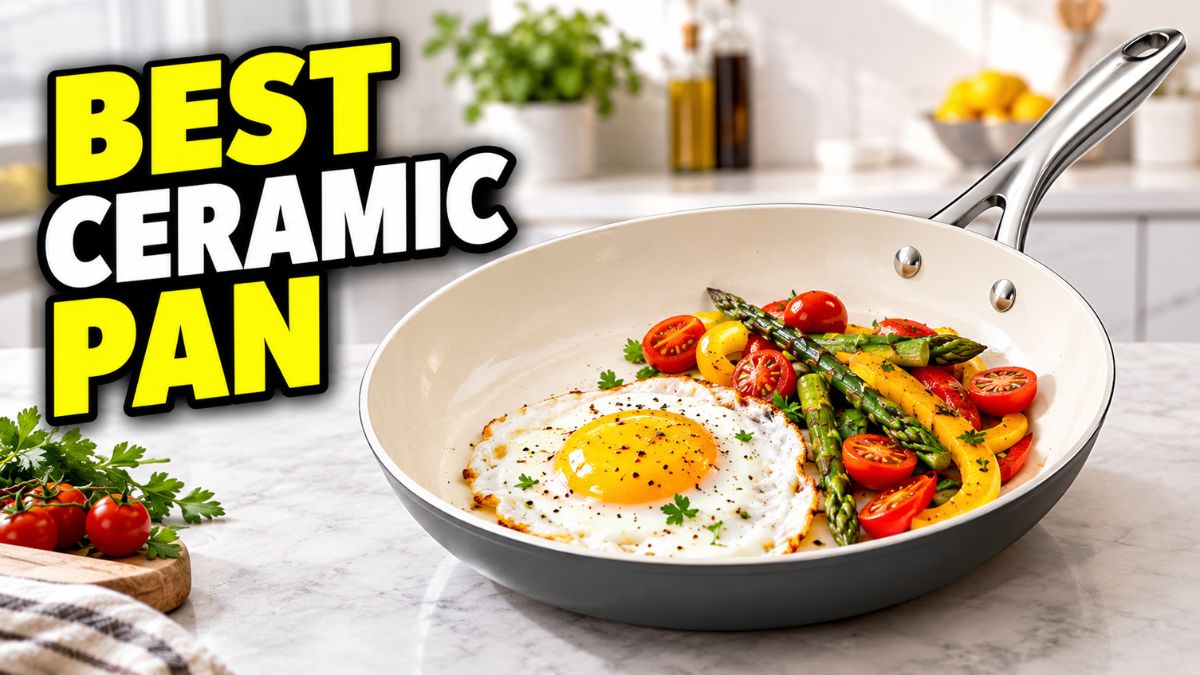
The best ceramic nonstick frying pan for most home cooks is a well-built skillet in a useful size—often around 10 or 11 inches—with a flat, stable base, clear care instructions, a comfortable handle, and verified cooktop compatibility. Ceramic nonstick is especially useful for eggs, pancakes, delicate fish, and quick meals cooked over low to medium heat. It is not automatically the best choice for intense searing or for cooks who want a coating-free pan that can last for decades. This research-based guide compares five supplied Amazon listings. Current listing data identifies Caraway, Blue Diamond, SENSARTE, Redchef, and a Calphalon two-pan set. Manufacturer information was consulted for key specifications. No physical cooking tests, independent heat measurements, durability tests, or current customer-rating checks were performed. Product variations and availability can change: confirm the selected size and exact model before purchasing.
Quick Comparison Table
| Image | Product | Key Feature | Buy Now |
|---|---|---|---|
| Caraway 10.5-Inch Ceramic Fry Pan 🏆 Everyday Candidate | 10.5-inch ceramic pan; induction-compatible; oven-safe to 550°F; hand wash. | Buy Now | |
| Blue Diamond Classic 10-Inch Frypan 🏆 10-Inch Option | 10-inch ceramic skillet; oven/broiler-safe to 600°F; not induction-compatible. | Buy Now | |
| SENSARTE Ceramic Frying Pan with Lid 🏆 Lidded Option | Ceramic skillet with glass lid and induction base; confirm selected size. | Buy Now | |
| Redchef 8-Inch Ceramic Egg Pan 📐 Small Portions | Compact 8-inch ceramic egg pan with an induction-compatible base. | Buy Now | |
| Calphalon Ceramic 8- and 10-Inch Fry Pan Set 🏆 Two-Pan Set | 8- and 10-inch ceramic pan set; oven-safe to 450°F; electric, glass, and gas. | Buy Now |


Ceramic Nonstick Frying Pans to Compare
Research-based editorial guide. No physical testing was performed. Product features below come from current Amazon listing data and should be checked against the exact model’s manufacturer instructions.
🌟 Key Features That Stand Out
- ✓ Size: 10.5-inch, 2.7-quart fry pan.
- ✓ Coating: Ceramic-coated cooking surface; manufacturer states made without PTFE and PFAS.
- ✓ Cooktops: Gas, electric, and induction compatible.
- ✓ Oven Use: Manufacturer states up to 550°F.
- ✓ Care: Hand wash; use low to medium stovetop heat.
💡 Why We Recommend It
🎯 Best For
✅ Pros
- 10.5-inch size for everyday meals
- Induction-compatible option
- Manufacturer documents oven use up to 550°F
- Individual pan rather than a full cookware set
❌ Cons
- Hand washing required by manufacturer
- Coating needs low to medium heat and gentle care
- Not independently tested for release or durability here
🌟 Key Features That Stand Out
- ✓ Size: 10-inch frying pan.
- ✓ Coating: Diamond-infused ceramic nonstick.
- ✓ Cooktops: All stovetops except induction, according to the maker.
- ✓ Oven Use: Maker lists oven and broiler safety up to 600°F.
- ✓ Care: Dishwasher-safe listing; gentle hand washing remains a practical care choice.
💡 Why We Recommend It
🎯 Best For
✅ Pros
- 10-inch size for eggs and pancakes
- Ceramic-coated cooking surface
- Manufacturer lists oven and broiler use up to 600°F
- Riveted stainless steel handle
❌ Cons
- Not compatible with induction
- Coating performance can diminish with wear
- Scratch-resistance marketing does not make it damage-proof
🌟 Key Features That Stand Out
- ✓ Coating: Ceramic nonstick; manufacturer discloses no intentionally added PTFE or PFAS.
- ✓ Body: Cast aluminum construction.
- ✓ Cooktops: Induction-compatible base.
- ✓ Lid and Handle: Tempered glass lid and woodgrain bakelite handle.
- ✓ Sizing: Product line offers 8, 9.5, 10, 11, and 12.5-inch sizes; confirm selected variant.
- ✓ Care: Manufacturer recommends hand washing to extend coating life.
💡 Why We Recommend It
🎯 Best For
✅ Pros
- Includes a tempered glass lid according to listing
- Manufacturer lists induction compatibility
- Multiple sizes in the product line
- Rivet-free interior simplifies access for cleaning
❌ Cons
- Exact ASIN size must be confirmed
- Handle and lid heat limits need model-specific checking
- Coated surface requires gentle care
🌟 Key Features That Stand Out
- ✓ Size: 8-inch small frying pan for eggs and sides.
- ✓ Coating: Ceramic nonstick cooking surface.
- ✓ Cooktops: Listing specifies induction, gas, electric, and ceramic compatibility.
- ✓ Handle: Riveted stainless steel design.
- ✓ Cleaning: Listing allows dishwasher use; follow the exact model’s care instructions.
💡 Why We Recommend It
🎯 Best For
✅ Pros
- Compact 8-inch format
- Useful size for small breakfasts
- Listing specifies induction compatibility
- Riveted stainless steel handle
❌ Cons
- Limited area for several portions
- Exact oven limit and warranty need confirmation
- Nonstick lifespan depends on use and care
🌟 Key Features That Stand Out
- ✓ Set Contents: 8-inch and 10-inch fry pans in Silver Ash.
- ✓ Construction: Ceramic-coated aluminum.
- ✓ Coating: Manufacturer states ceramic nonstick made without PFAS.
- ✓ Cooktops: Electric, glass, and gas listed by manufacturer.
- ✓ Oven Use: Up to 450°F.
- ✓ Care and Warranty: Dishwasher-safe; hand washing recommended; limited 10-year warranty.
💡 Why We Recommend It
🎯 Best For
✅ Pros
- Two sizes for small and everyday portions
- Manufacturer lists oven use up to 450°F
- Stainless steel handles
- Limited 10-year manufacturer warranty
❌ Cons
- Two pans require more storage than one
- Manufacturer lists electric, glass, and gas, not induction
- Hand washing is recommended despite dishwasher compatibility
🏆 Our Top Pick
Choose a ceramic nonstick frying pan based on verified product information and your everyday cooking habits. For most kitchens, a well-built 10- or 11-inch skillet is a practical starting point. A compact pan may be easier to handle for small portions, while a wider surface helps prevent crowding. Induction users must verify compatibility, and oven use requires checking the exact temperature limit.
How to Choose the Best Ceramic Nonstick Frying Pan
1. Choose a useful diameter
An 8-inch skillet is handy for one or two eggs, a small omelet, or a single serving. A 10-inch pan is a versatile starting point for one or two people, while an 11- or 12-inch model gives more room for vegetables, pancakes, or multiple portions. Larger is not always better: the pan should fit the burner, be comfortable to lift, and have enough cooking area for your usual meal without crowding food. If breakfast is the main task, our nonstick frying pan guide for eggs compares compact and larger formats.
2. Understand what ceramic nonstick means
Many ceramic nonstick pans use a thin, silica-based coating applied to a metal body; they are not typically solid ceramic throughout. The coating can provide easy food release when new, but it is still a wear surface. Ask the manufacturer for the specific coating description and check any PFAS-free or PTFE-free claim against the product documentation. Avoid treating vague phrases such as healthy or non-toxic as a substitute for clear material information.
3. Look for a stable base and comfortable handle
A flat, sturdy base helps the pan sit securely and transfer heat predictably. A very light body may be easy to handle, but can be more prone to uneven heating or warping depending on its construction. The handle should feel secure and balanced with food in the pan. Check whether it stays cool during stovetop use, whether it is oven-safe, and whether the pan’s weight will be manageable for everyone who cooks in your household.
4. Confirm your cooktop
Gas, conventional electric, and glass-ceramic cooktops can accommodate many pan types, but induction requires a compatible magnetic base. Do not assume a ceramic coating means induction-ready: ceramic describes the cooking surface, not the magnetic properties of the base. Look for explicit manufacturer confirmation for your exact model. On any cooktop, choose a burner close to the pan’s base diameter and avoid overheating the sides of a smaller skillet.
5. Read oven and heat limits carefully
Oven-safe does not mean safe at every temperature. The coating, handle, lid, and other components may have different limits. Verify the maximum oven temperature for the complete product and any included lid. Ceramic nonstick is generally best suited to low- and medium-heat cooking; it is not the ideal tool for prolonged high-heat searing. Preheating an empty coated pan on high can damage the surface, so follow the maker’s specific instructions. For a separate pan dedicated to browning meat, compare the options in our cast iron skillet guide for steak.
6. Treat cleaning and care as part of the purchase
Hand washing with warm water, dish soap, and a soft sponge is a conservative way to care for many coated pans. Abrasive pads, harsh cleaners, sudden temperature changes, and stacking pans without protection can shorten the useful life of the surface. Even if a listing says dishwasher-safe, check whether the manufacturer recommends hand washing to preserve performance. Avoid cooking sprays that can leave stubborn residue unless the maker explicitly approves them.
7. Evaluate value beyond the sticker price
Compare the actual pan size, construction, warranty, replacement availability, and seller return policy—not just the headline price. A premium finish or accessory set is not automatically worth paying extra for. Conversely, a very cheap pan with unclear coating information or no useful support may not be a bargain. Since coating wear is a normal consideration, think of a ceramic skillet as a convenient cooking tool that requires care rather than a lifetime purchase. If you are open to a different material, our cast iron skillets under $50 comparison offers another way to evaluate an affordable skillet.
8. Match the pan to the food you cook
Ceramic nonstick is particularly practical for eggs, crepes, pancakes, flaky fish, and quick vegetable dishes. If your routine involves hard searing, high-heat stir-frying, metal utensils, or frequent broiler use, an uncoated stainless-steel or carbon-steel pan may be more appropriate. Choosing the right tool for the cooking style is often more important than buying the most expensive coated skillet.
Practical Tips for Getting the Most From a Ceramic Pan
- Start with moderate heat. Use low to medium heat unless the manufacturer says otherwise. Ceramic-coated pans generally do not need a high flame to cook eggs or pancakes.
- Avoid heating it empty for long periods. Add a little oil or food according to the recipe and the pan’s instructions rather than letting the empty skillet heat unattended.
- Choose gentle utensils. Wood, silicone, or heat-safe nylon helps reduce scratches. Do not assume scratch-resistant means damage-proof.
- Let the pan cool before washing. Sudden temperature changes can stress the pan body and coating. Use warm water and a soft sponge.
- Keep the cooking surface clean. A thin film of oil or cooked-on residue can reduce release. Clean after use, and avoid abrasive scouring unless the manufacturer specifically permits it.
- Protect it in storage. If pans are stacked, place a soft pan protector or clean cloth between them to prevent scratches.
- Use the right burner size. A burner much larger than the base can overheat the sides and handle area. Keep the flame beneath the pan rather than around it.
- Replace a damaged pan. Stop using cookware if the coating is peeling, flaking, bubbling, or deeply scratched. Check the manufacturer’s advice for the particular product.
For a wider cooking surface when making several pancakes at once, our cast iron griddle comparison for pancake breakfasts explains the space and care trade-offs.
Ceramic vs. Traditional Nonstick: Which Is Better?
Neither surface is best for every cook. Ceramic nonstick appeals to buyers who want a cooking surface marketed without PTFE and often with explicit PFAS-free claims. It can release delicate foods well when new, but the release performance may diminish with wear and poor care. Traditional PTFE-based nonstick is often very slick and convenient, but it too needs careful temperature control and should not be overheated. Compare the exact product’s material disclosures, instructions, and warranty rather than making a decision from the word nonstick alone.
If you want to avoid a coated cooking surface entirely, stainless steel, cast iron, and carbon steel are alternatives. They require different cooking techniques and maintenance, but do not depend on a ceramic nonstick layer for food release. Our guide to pre-seasoned cast iron cookware explains another option and its seasoning requirements.
Is a Ceramic Nonstick Pan Worth It?
It can be worth it if you often cook foods that stick easily and value quick cleanup. For eggs, pancakes, and delicate fish, a well-maintained ceramic skillet can make everyday cooking more convenient. The trade-off is that the coating is not permanent and may lose its slickness over time, especially with high heat, abrasive cleaning, or metal utensils. If you prefer cookware that can take rougher use for many years, an uncoated pan may offer better long-term value. Consider the pan’s expected use, verified materials, and care routine—not only its appearance or marketing claims.
Common Problems With Ceramic Nonstick Pans
Food starts sticking
Loss of release can result from normal wear, overheating, residue buildup, or abrasive cleaning. Clean the pan gently according to its instructions and avoid high heat. If the surface is visibly damaged or sticking persists, consult the manufacturer and consider replacement.
The pan seems to heat unevenly
Check that the base sits flat and that the burner size matches the pan. A warped base may not contact an electric or glass-ceramic surface evenly. If the pan rocks on a flat surface or has visibly deformed, stop using it and contact the seller or manufacturer.
Stains or discoloration appear
Some discoloration can occur during normal use. Avoid aggressive scrubbing or harsh cleaners unless permitted by the maker. If the coating bubbles, peels, or flakes, treat that as damage rather than a cosmetic stain.
How We Selected These Products
This is a research-based buying guide, not a report of hands-on testing. Selection criteria include identifiable product information, coating transparency, size options, body and handle construction, cooktop compatibility, oven-temperature limits, care instructions, warranty terms, and suitability for common home-cooking tasks. We did not conduct physical tests, independently measure heat distribution, or verify current Amazon prices and ratings. The current listings identified the supplied ASINs; important model details were compared with manufacturer information where available. Confirm the selected SENSARTE size and all current variant specifications before purchase. Category labels describe use cases, not laboratory awards.
Manufacturer references: Caraway fry pan specifications and care; Blue Diamond Classic 10-inch frypan; SENSARTE lidded ceramic skillet range; Redchef ceramic frying pan range; Calphalon 8- and 10-inch set specifications.


