
Best Stainless Steel Pan for Searing Steak: 5 Options Compared
Compare five stainless steel steak pans by construction, cooking space, handling, cooktop compatibility, oven limits, and value.
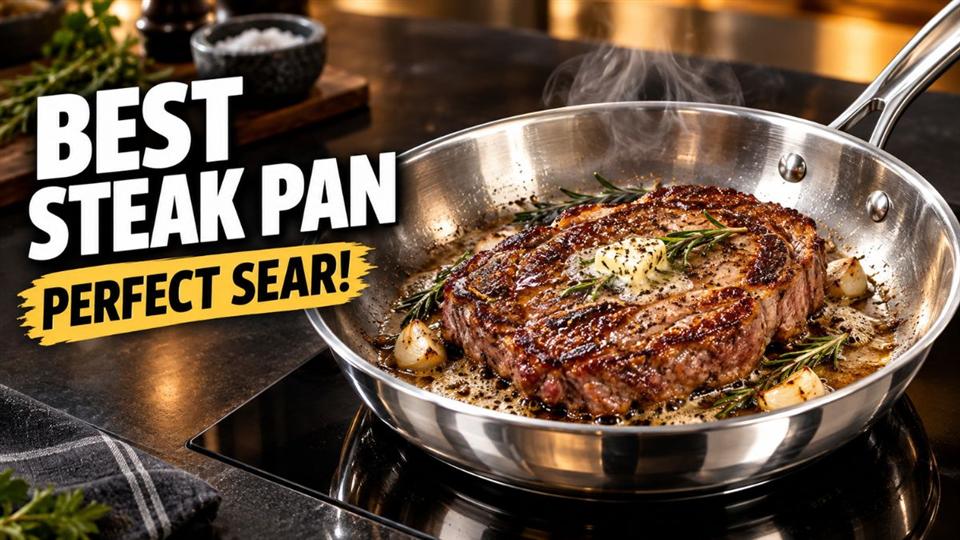
The best stainless steel pan for searing steak should offer enough flat cooking space, suitable construction, secure handling, and clear cooktop and oven instructions. A bare stainless surface is useful for browning meat and developing fond for a pan sauce, but it needs attention to heat, oil, and food release. This guide compares All-Clad D3 and D5, Tramontina Signature, Cuisinart MultiClad Pro, and Made In. Fully clad construction and layer count alone do not guarantee a better crust or durability. These recommendations use product information rather than hands-on tests. Confirm the exact model, diameter, included accessories, compatibility, temperature limits, current price, and care instructions before buying.
Quick Comparison Table
| Image | Product | Key Feature | Buy Now |
|---|---|---|---|
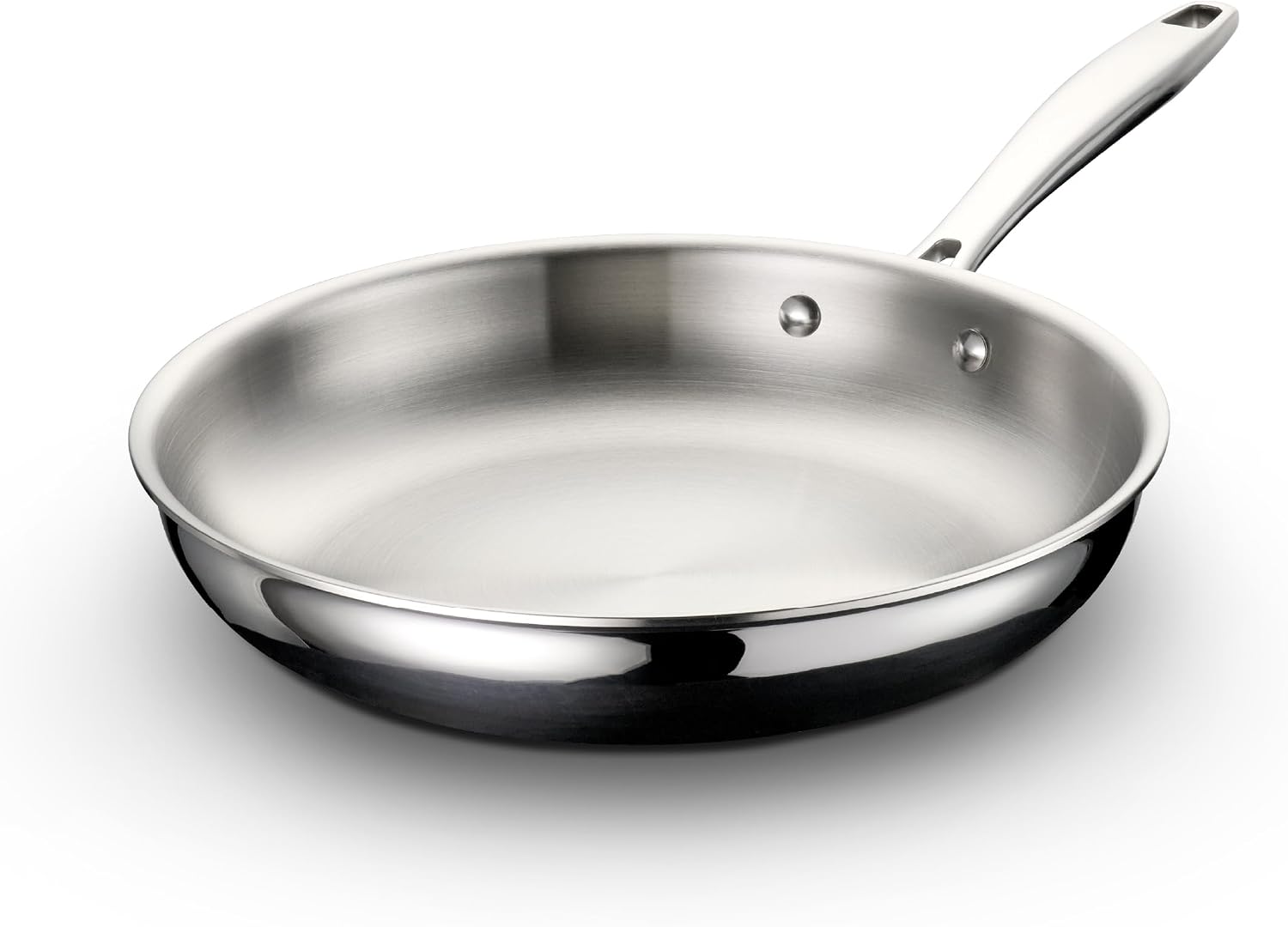
| All-Clad D3 12-Inch Fry Pan with Lid 🏆 Overall Starting Pick | 12-inch fully clad tri-ply pan with stainless lid; induction-compatible; hand wash. | Buy Now | |
| Tramontina Signature Tri-Ply 10-Inch Fry Pan 📐 Smaller Everyday Option | 10-inch tri-ply clad skillet; induction-compatible; listed oven limit 500°F. | Buy Now | |
| Cuisinart MultiClad Pro 10-Inch Open Skillet 🥈 Tri-Ply Alternative | 10-inch triple-ply open skillet with tapered rim and riveted handle. | Buy Now | |
| All-Clad D5 12-Inch Fry Pan 🥈 Five-Ply Alternative | 12-inch five-ply fry pan; brushed finish; induction-compatible; hand wash. | Buy Now | |
| Made In Stainless Clad 12-Inch Frying Pan 🏆 Five-Ply Pan for Larger Cuts | Five-ply 12-inch pan with 9.5-inch cooking surface and riveted handle. | Buy Now |



Recommended Amazon Products
Research-based comparisons using identified listings and manufacturer information where available. No physical searing, heat-distribution, or durability tests were performed.
🌟 Key Features That Stand Out
- ✓ Construction: Fully bonded tri-ply stainless steel with aluminum core.
- ✓ Size: 12-inch fry pan with stainless steel lid.
- ✓ Cooktops: Includes induction according to current listing.
- ✓ Heat Limits: Maker lists oven and broiler use to 600°F; follow exact component instructions.
- ✓ Handling: Double-riveted stainless handle and flared edge.
- ✓ Care: Hand washing specified by current manufacturer page.
💡 Why We Recommend It
🎯 Best For
✅ Pros
- Fully clad tri-ply construction
- 12-inch format for larger cuts
- Stainless steel lid included
- Induction compatibility listed
- Manufacturer documents oven and broiler use
❌ Cons
- Premium purchase price
- Large pan needs storage and lifting space
- Uncoated steel requires heat and release technique
🌟 Key Features That Stand Out
- ✓ Size: 10-inch frying pan.
- ✓ Construction: Tri-ply clad stainless steel with aluminum core.
- ✓ Cooktops: All cooktops including induction listed.
- ✓ Oven Use: Listing states up to 500°F.
- ✓ Handle: Riveted stainless steel grip.
- ✓ Care: Dishwasher-compatible listing; follow current manual.
💡 Why We Recommend It
🎯 Best For
✅ Pros
- Fully clad tri-ply construction
- Compact everyday format
- Induction compatibility listed
- Riveted stainless steel handle
❌ Cons
- Less space for multiple steaks
- Lower listed oven limit than some alternatives
- Value depends on current price
🌟 Key Features That Stand Out
- ✓ Model: MCP22-24N, 10-inch open skillet.
- ✓ Construction: Triple-ply stainless steel.
- ✓ Handle: Riveted cast stainless steel.
- ✓ Rim: Tapered for pouring.
- ✓ Heat Limits: Current listing states oven use to 550°F and broiler compatibility; confirm exact manual.
- ✓ Care: Listing permits dishwasher cleaning.
💡 Why We Recommend It
🎯 Best For
✅ Pros
- Triple-ply construction
- Moderate 10-inch format
- Tapered pouring rim
- Riveted handle
❌ Cons
- Less cooking space than a 12-inch pan
- No included lid assumed
- Exact model heat and cooktop guidance should be checked
🌟 Key Features That Stand Out
- ✓ Size: 12-inch frying pan.
- ✓ Construction: Five-ply bonded stainless steel and aluminum layers.
- ✓ Finish: Current listing describes brushed stainless steel.
- ✓ Cooktops: Includes induction according to listing.
- ✓ Heat Limits: Listing states oven and broiler use to 600°F.
- ✓ Care: Hand wash; follow exact current product instructions.
💡 Why We Recommend It
🎯 Best For
✅ Pros
- Five-ply bonded construction
- Larger 12-inch format
- Induction compatibility listed
- Flared rim and riveted handle
❌ Cons
- Premium cost
- Weight and size may be excessive for small meals
- Extra layers do not guarantee better results
🌟 Key Features That Stand Out
- ✓ Format: Nominal 12-inch stainless clad frying pan.
- ✓ Dimensions: Listing gives 12.5-inch total diameter and 9.5-inch cooking surface.
- ✓ Construction: Five-ply metal body.
- ✓ Handle: Stainless steel rivets; not a rivetless design.
- ✓ Cooktops: Induction compatibility listed.
- ✓ Oven Use: Manufacturer Stainless Clad range specifies up to 800°F; confirm supplied model.
- ✓ Origin: Listing identifies manufacture in Italy.
💡 Why We Recommend It
🎯 Best For
✅ Pros
- Five-ply construction
- Published cooking-surface dimensions
- Induction-compatible listing
- Manufacturer documents high oven limit for the range
❌ Cons
- Premium cost
- Rivets require cleaning around their edges
- Requires preheating and food-release technique
🏆 Our Top Pick
How to Choose a Stainless Steel Pan for Steak
Fully clad vs. encapsulated-base construction
Fully clad pans carry a conductive core through the base and sidewalls. An encapsulated or disk-bonded base concentrates the layered construction at the bottom. Both can brown steak, and neither design guarantees uniform results: burner size, pan thickness, preheating, and food placement matter. Our stainless steel frying pan guide for beginners explains the construction and technique trade-offs.
Thickness and thermal response
A thicker body can store more heat but may be heavier and slower to respond. Layer count alone does not establish thickness, heat retention, or resistance to warping. Compare published dimensions and weight for the exact model rather than treating five layers as an automatic improvement over three. There is no universal minimum thickness that guarantees a better steak.
Size and usable cooking area
Choose enough flat space for your usual steak without crowding. A 10-inch pan can suit a single smaller cut; a 12-inch format offers more room but does not guarantee space for two large steaks. Check the flat bottom diameter, sloping sides, burner fit, and storage footprint rather than relying only on the rim measurement.
Handles and balance
A loaded pan should feel secure when you lift it, tilt it for basting, or transfer it to an oven. Compare handle shape, attachment, and any helper handle. Comfort is personal; an ergonomic marketing claim does not establish reduced wrist strain for every user. Metal handles can become hot, especially after oven use, so use suitable protection.
Cooktop, oven, and broiler compatibility
Confirm induction compatibility for the exact model and size. Check oven and broiler permissions separately, along with the lower limit of any lid or accessory. An oven temperature rating does not mean a pan should sit empty over maximum stovetop heat. Follow the manufacturer’s guidance for preheating and temperature changes.
Care and everyday value
Uncoated stainless steel is useful for browning and deglazing, but food can stick. Some makers specify hand washing even when similar cookware is dishwasher-compatible. Compare warranty terms, seller eligibility, return policy, and current price. If you also need saucepans and a stockpot, our stainless steel cookware set comparison for a $200 budget helps assess a full set against buying one skillet.
Stainless Steel vs. Cast Iron for Searing Steak
Both materials can develop a browned crust with suitable technique. Stainless steel offers an uncoated surface for fond and pan sauces without a seasoning layer to maintain. Cast iron often brings more weight and a different heat response, along with drying and seasoning care. For that alternative, our cast iron skillet comparison for steak discusses cooking space, handling, and maintenance.
A dedicated coated skillet can remain useful for delicate breakfast foods even when stainless steel is your steak pan. Our nonstick frying pan guide for eggs compares that separate role. Do not transfer stainless steel searing or broiler methods to a coated pan without checking its instructions.
Practical Tips for Searing in Stainless Steel
- Pat the steak’s surface dry to reduce excess moisture and splattering.
- Preheat gradually at the setting recommended for the pan and cooktop. A fixed time is unreliable across different burners.
- Add an appropriate cooking oil and avoid heating it until it smokes heavily. Reduce heat if food or drippings scorch.
- Leave room around each steak; cook in batches when necessary.
- Allow a browned surface to develop before trying to turn the steak. If it resists, check the heat and give it more time rather than forcing it.
- Add butter and delicate aromatics later at a reduced temperature so they are less likely to burn.
- Use browned fond, rather than blackened residue, for a pan sauce. Add liquid carefully after adjusting the heat.
- Use a food thermometer to assess internal doneness; crust color alone does not show the temperature inside.
A skittering water droplet is not a precise thermometer and can indicate a very hot surface. Do not use it as a universal signal that every pan, oil, and recipe has reached the right temperature. Follow model-specific preheating guidance.
Cleaning and Common Problems
Steak sticks
Review preheating, oil amount, surface moisture, and whether the food was moved before browning. Stainless steel is not naturally nonstick; buying a premium pan does not remove the need for technique.
Drippings burn before the steak browns
Lower the heat, check burner-to-base fit, and avoid overcrowding. More heat is not always the solution. Do not add a pan sauce to heavily blackened residue.
Burnt-on grease or discoloration remains
Allow the pan to cool, then start with warm water, dish soap, and a nonabrasive sponge. For stubborn marks, use only a cleaner approved by the cookware manufacturer and follow the cleaner’s label. Avoid a universal soaking time or abrasive treatment.
The base rocks or has warped
Stop and consult the manufacturer. Avoid plunging a hot pan into cold water and do not assume any ply count makes cookware immune to thermal damage.
How We Assess the Shortlist
This is a research-based buying guide, not a report of hands-on cooking tests. We compare identifiable product listings, construction, cooking space, handling, compatibility, heat restrictions, care, and intended use. No independent heat maps, steak-release tests, durability measurements, or current customer-rating checks were performed. Editorial labels are use-case suggestions rather than laboratory awards. Current prices, supplied versions, accessories, warranty terms, and specifications should be checked before buying.


