
Best Nonstick Pan for Electric Stove: 4 Options Compared
Compare four nonstick cookware options for electric stoves by size, base design, coating, handling, heat limits, and care.
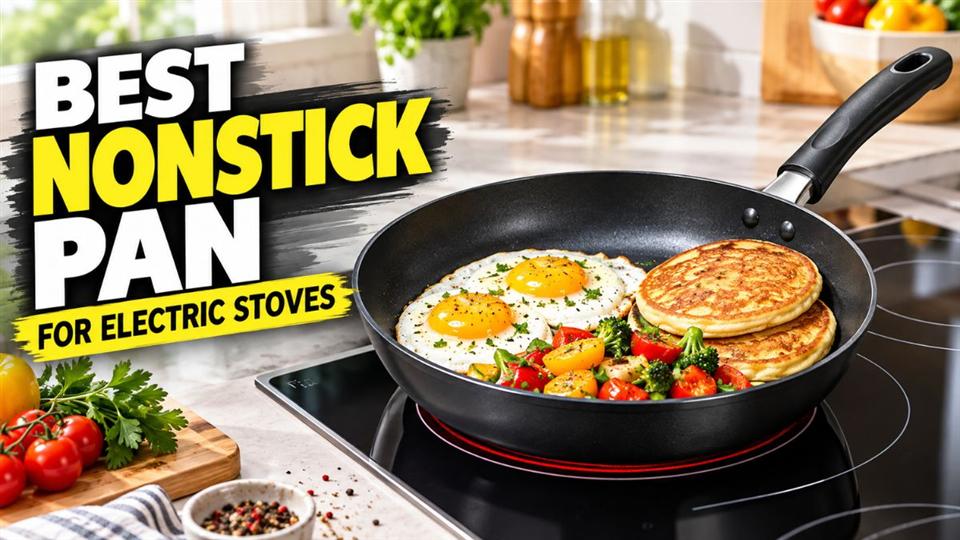
The best nonstick pan for an electric stove has a stable, suitable base, enough cooking space for your portions, and coating and care instructions that fit your routine. Traditional coil and radiant glass-ceramic burners differ from induction: a pan that works on a conventional electric stove does not automatically work on induction. This guide compares a SENSARTE deep skillet, a compact SENSARTE lidded pan, a Tramontina Professional 12-inch skillet, and the GreenPan Valencia Pro ceramic set. We used identified listings and manufacturer information where available; no physical cooking, heat-distribution, warping, or durability tests were performed. Confirm the exact size, coating description, included pieces, heat limits, current price, and product and cooktop instructions before buying.
Quick Comparison Table
| Image | Product | Key Feature | Buy Now |
|---|---|---|---|
| SENSARTE 12-Inch Deep Skillet with Lid 🏆 One-Pan Meals | 12-inch, 5-quart deep nonstick skillet with lid and helper handle; electric and induction. | Buy Now | |
| SENSARTE 8-Inch Nonstick Pan with Lid 📐 Small Breakfasts | Compact 8-inch ILAG nonstick pan with glass lid; electric and induction compatible. | Buy Now | |
| Tramontina Professional 12-Inch Nonstick Fry Pan 🏆 Larger Shallow Skillet | 12-inch heavy-gauge aluminum nonstick skillet; electric and ceramic glass; not induction. | Buy Now | |
| GreenPan Valencia Pro 3-Piece Frypan Set 🏆 Ceramic Set | 8-, 9.5-, and 11-inch ceramic frypan set; hard-anodized bodies; all cooktops listed. | Buy Now |


Recommended Amazon Products
Research-based comparisons of identified cookware listings. No physical cooking, heat-distribution, warping, or coating-durability tests were performed.
🌟 Key Features That Stand Out
- ✓ Format: 12-inch, 5-quart deep skillet with glass lid.
- ✓ Body: Cast aluminum.
- ✓ Coating: ILAG nonstick described in current listing; confirm exact composition.
- ✓ Cooktops: All stovetops including induction listed.
- ✓ Handling: Bakelite handle and helper handle.
- ✓ Care: Hand washing recommended; verify exact heat restrictions.
💡 Why We Recommend It
🎯 Best For
✅ Pros
- Deep format for varied one-pan meals
- Glass lid included
- Helper handle
- Electric and induction compatibility listed
❌ Cons
- Large for individual breakfasts
- Deep walls less convenient for flipping
- Handle and lid heat restrictions require checking
🌟 Key Features That Stand Out
- ✓ Size: 8-inch frying pan with glass lid.
- ✓ Coating: ILAG granite-style nonstick.
- ✓ Base: Magnetic stainless steel base; electric and induction compatibility listed.
- ✓ Handle: Woodgrain bakelite.
- ✓ Oven Use: Listing states up to 302°F; confirm lid and handle limits.
- ✓ Cleaning: Rivet-free interior; follow gentle-care instructions.
💡 Why We Recommend It
🎯 Best For
✅ Pros
- Compact size for small servings
- Glass lid included
- Rivet-free interior
- Electric and induction compatibility listed
❌ Cons
- Limited room for multiple portions
- Lower stated oven limit than some alternatives
- Nonstick surface requires gentle care
🌟 Key Features That Stand Out
- ✓ Size: 12-inch nonstick frying pan.
- ✓ Construction: Commercial-grade heavy-gauge aluminum.
- ✓ Cooktops: Gas, electric, and ceramic glass; not induction.
- ✓ Oven Use: Listing states up to 400°F/204°C.
- ✓ Listing Identifier: Tramontina 80114/536DS.
- ✓ Care: Follow current pan and handle-grip instructions.
💡 Why We Recommend It
🎯 Best For
✅ Pros
- Larger shallow cooking format
- Heavy-gauge aluminum body
- Electric and ceramic-glass compatibility
- Documented 400°F oven limit
❌ Cons
- Not induction-compatible
- Needs more storage than a compact pan
- Coating and grip require model-specific care
🌟 Key Features That Stand Out
- ✓ Contents: 8-, 9.5-, and 11-inch frying pans.
- ✓ Surface: Diamond-infused ceramic nonstick.
- ✓ Construction: Hard-anodized body.
- ✓ Cooktops: All stovetops including induction listed.
- ✓ Oven Use: Listing states pans to 600°F; verify exact supplied instructions.
- ✓ Care: Dishwasher-compatible listing; gentle care remains important.
💡 Why We Recommend It
🎯 Best For
✅ Pros
- Three everyday frying-pan sizes
- Ceramic-coated alternative
- Electric and induction compatibility listed
- Useful for varied portions
❌ Cons
- Three pans require more storage
- Not a full saucepan-and-stockpot set
- Coating performance can change with use
🏆 Our Top Pick
How to Choose a Nonstick Pan for an Electric Stove
Match the base to the burner
Look for cookware approved for your exact cooktop type, with a stable base suited to the heating zone. On a glass-ceramic stove, follow the appliance manual for permitted cookware, surface condition, weight, and base dimensions. Keep the bottom clean and lift pans rather than dragging them. A hard-anodized body or thick base does not make a pan immune to warping.
Choose useful size and depth
An 8-inch pan can suit individual eggs and small sides, while a 10- to 12-inch format provides more room for larger meals. Deep skillets accommodate liquids and one-pan dishes, but their walls may make flipping less convenient than a shallow pan. Compare usable cooking area and base diameter, not just the rim measurement. Our nonstick frying pan comparison for eggs explains smaller and larger breakfast formats.
Understand the coating and body
Traditional nonstick and ceramic coatings have different material disclosures and care requirements. Words such as granite, diamond, or healthy do not establish the exact chemistry or predict lifespan. Aluminum conducts heat, but construction alone does not prove uniform heating on every electric burner. Our ceramic nonstick frying pan buying guide explores ceramic options and maintenance.
Distinguish radiant electric from induction
Induction is electrically powered but needs an appropriate magnetic cookware base. Conventional coils and radiant glass-ceramic elements have different requirements. Do not infer induction compatibility from electric-stove compatibility. If you may switch cooktops, our nonstick cookware guide for induction cooktops helps compare magnetic bases and cookware formats.
Check weight, handles, and lids
A large pan may be harder to lift, wash, or store when full. Check grip comfort, balance, helper handles, and whether a lid is included. A stay-cool description is not a guarantee that a handle will remain cool under every condition. Follow the product’s handling guidance.
Read oven and cleaning instructions
Temperature limits depend on the exact coating, handle, lid, and model. Never assign an oven limit from handle material alone. Hand washing with mild soap and a soft sponge is a gentle option where permitted, even if dishwasher use is listed. Use approved utensils and avoid abrasive tools.
Practical Tips for Electric-Stove Nonstick Cookware
- Use the burner size and cookware specified by your cooktop manual.
- Start with low to medium heat and follow the pan’s specific preheating instructions.
- Remember that coil and radiant elements can remain hot after the setting is reduced or switched off.
- Avoid prolonged empty heating, unattended preheating, and thermal shock.
- Use approved silicone, wood, or heat-resistant nylon utensils.
- Avoid aerosol sprays if the maker warns that they leave residue; use a suitable small amount of oil when needed.
- Let the pan cool before gentle washing, then protect its surface when stacking.
- Check for peeling, flaking, deep scratches, loose handles, or a distorted base and follow the manufacturer’s replacement guidance.
Is Nonstick the Right Tool for High-Heat Searing?
Nonstick is convenient for eggs, pancakes, and delicate foods, but an oven rating does not authorize prolonged high stovetop heat. For a separate tool dedicated to browning steak and developing fond, our stainless steel pan comparison for searing steak discusses uncoated alternatives and their different cooking technique.
Common Problems and What to Check
The pan rocks or heats unevenly
Check base condition, burner-to-pan fit, and the appliance manual. A warped pan or one that no longer sits securely should be assessed with the manufacturer. More heat may worsen the problem.
Food starts sticking
Check heat setting, residue buildup, utensil use, and coating condition. Clean according to the manual; aggressive scrubbing cannot repair a worn coating.
The handle or lid limits oven use
Use the lowest applicable component limit and follow model-specific oven and broiler restrictions. Do not assume different products from one brand share the same ratings.
How We Select and Compare Products
This research-based guide uses identifiable cookware listings and manufacturer information where available. We compare size, shape, coating description, construction, cooktop compatibility, handling, heat restrictions, and care. We did not conduct cooking tests, heat maps, warping tests, long-term coating assessments, or current customer-rating checks. Use-case labels are editorial guidance rather than performance awards. Verify the exact variant, included accessories, warranty, return terms, current price, and instructions before purchase.


